OpBuddy
BACK
Module 2 · Topic

Prehabilitation Exercises

Prehabilitation — targeted exercise before surgery — helps you enter the operation stronger and recover more quickly. The goal is to maintain range of movement and strengthen the muscles around your knee.

Prehabilitation Exercises

What to focus on

Quadriceps strengthening (straight-leg raises, seated knee extensions) protects the muscles that will support your new joint.

Gentle hip and calf work, plus low-impact cardiovascular exercise like walking or stationary cycling, supports overall fitness.

How much and how often

Aim for a short, daily routine rather than long, infrequent sessions.

Work within a tolerable level of discomfort — sharp pain means you should stop and modify the exercise.

Interactive guide
Introduction

Just 10–15 minutes a day can make your recovery easier

Stronger muscles and better knee movement before surgery often lead to a smoother recovery afterwards.

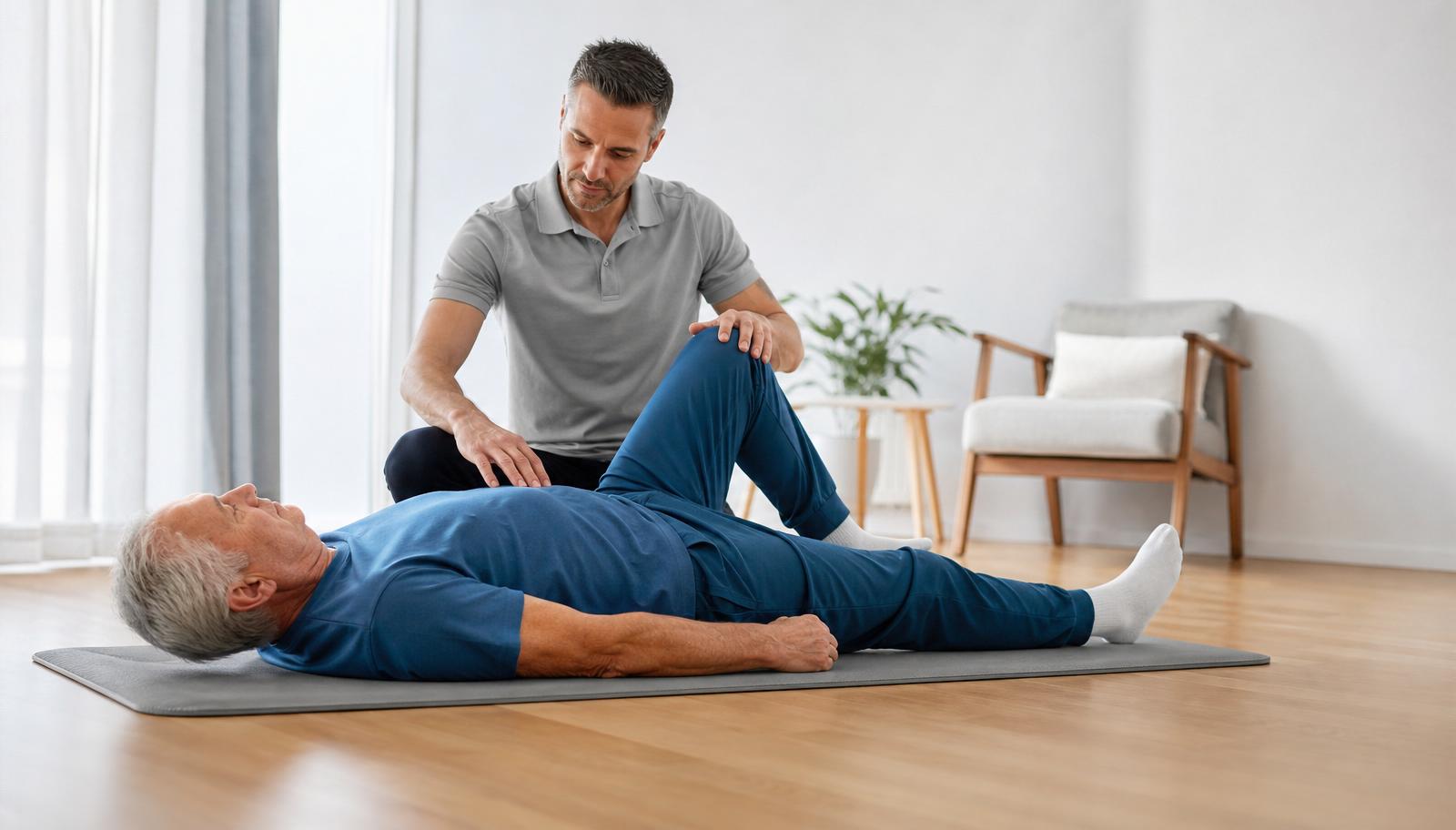
Older adult performing supervised physiotherapy exercises at home on a mat in a bright modern living room
Why exercise before surgery?
  • Stronger muscles
  • Better knee movement
  • Easier rehabilitation
  • Faster return to walking
🦵

Better muscle strength

Stronger muscles help support your new knee.

📈

Better knee movement

Movement before surgery predicts movement afterwards.

🚶

Patients who stay active

Often find rehabilitation easier after their operation.

The science, simply

Why should I exercise before surgery?

When arthritis becomes painful, people naturally walk less. This causes muscles around the knee and hip to weaken.

Prehabilitation — or "prehab" — means strengthening these muscles before surgery. Research and physiotherapy programmes consistently show that maintaining knee movement and quadriceps strength before surgery makes rehabilitation easier afterwards.

Weak muscles
  1. 1Less support for the knee
  2. 2Harder rehabilitation
Strong muscles
  1. 1Better support for the knee
  2. 2Quicker confidence walking
  3. 3Better recovery
Your daily routine

The five essential exercises

Each exercise takes under two minutes. Together they build the strength and range of movement your new knee needs.

1
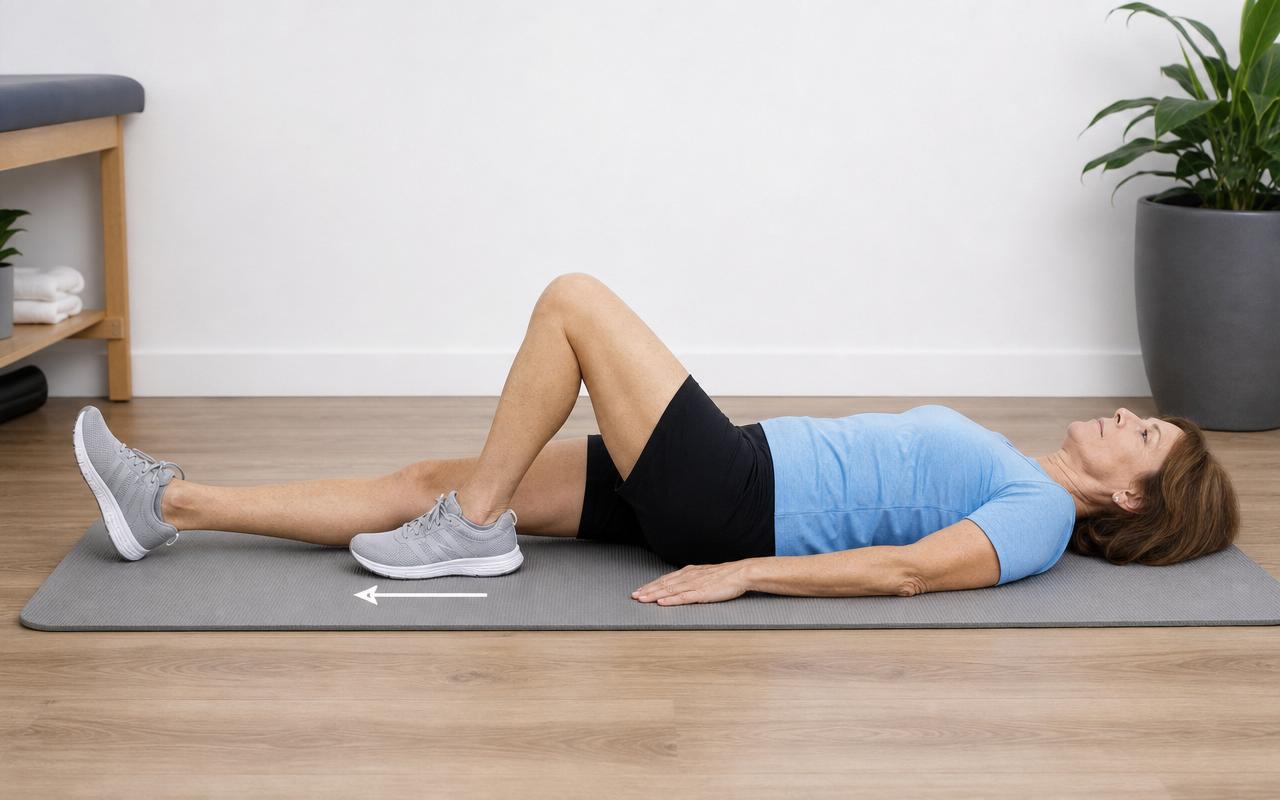
Patient lying on a grey exercise mat performing a heel slide, sliding the heel toward the buttocks

Heel Slides

~2 minutes Easy
MusclesKnee jointHamstringsQuadriceps
Why it matters

One of the most important goals before surgery is maintaining knee bending. The easier your knee bends before surgery, the easier it usually bends afterwards.

How to do it
  1. 1Lie on your back.
  2. 2Slowly slide your heel towards your bottom.
  3. 3Only move as far as comfortable.
  4. 4Hold for 3–5 seconds.
  5. 5Slowly straighten the leg again.
Common mistakes
  • Forcing the knee past a comfortable range.
  • Sliding the heel too quickly instead of controlled.
  • Lifting the heel off the surface instead of sliding it.
Goal
10 repetitions · twice daily
2
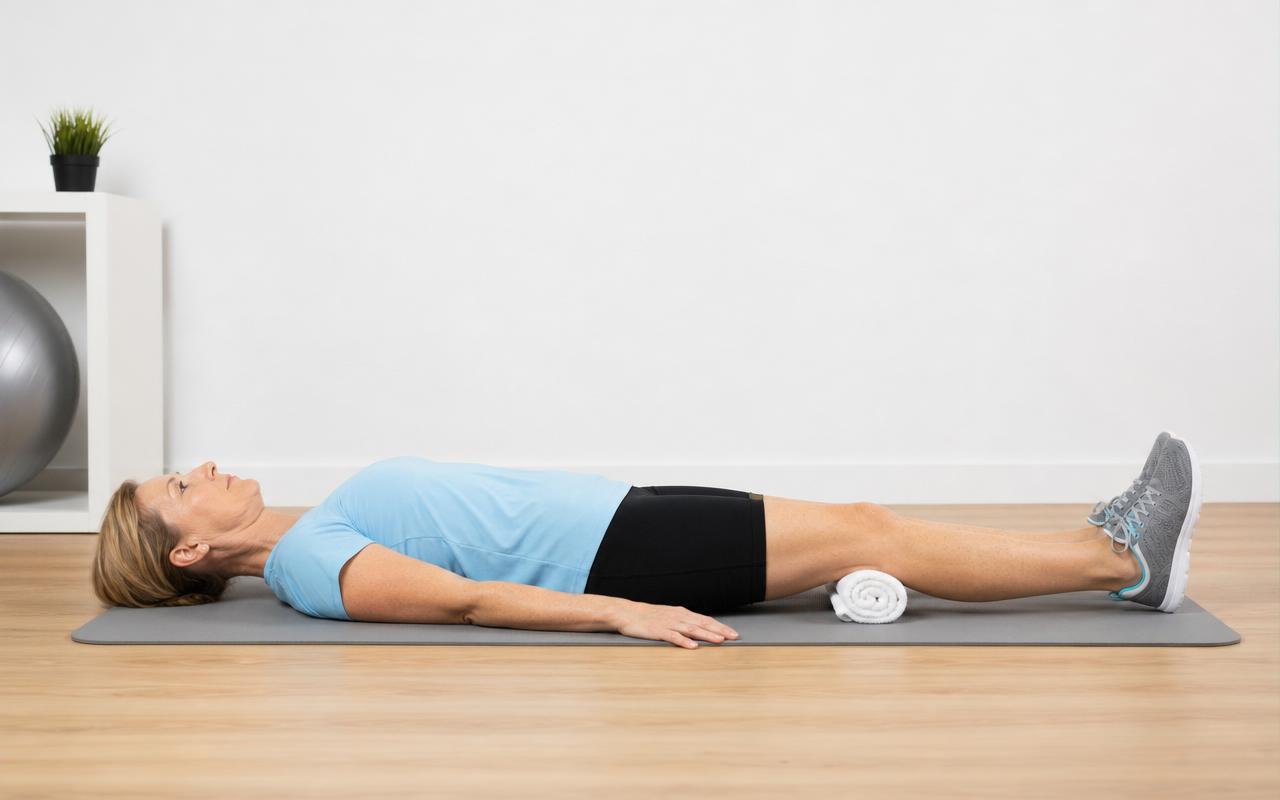
Patient lying flat with leg straight and a small rolled towel under the knee, tightening the quadriceps

Quadriceps Sets (Thigh Squeezes)

~1 minute Easy
MusclesQuadriceps
Why it matters

The quadriceps are the most important muscles after knee replacement.

  • Stand up more easily
  • Walk with confidence
  • Climb stairs
  • Straighten the knee fully
How to do it
  1. 1Lie with your leg straight.
  2. 2Push the back of your knee gently into the bed.
  3. 3Tighten the front thigh muscles.
  4. 4Hold 5 seconds.
  5. 5Relax and repeat.
Common mistakes
  • Holding your breath while squeezing.
  • Squeezing so hard it causes cramp — aim for firm, not maximum.
  • Lifting the leg off the bed instead of pressing down.
Goal
10 repetitions · twice daily
3
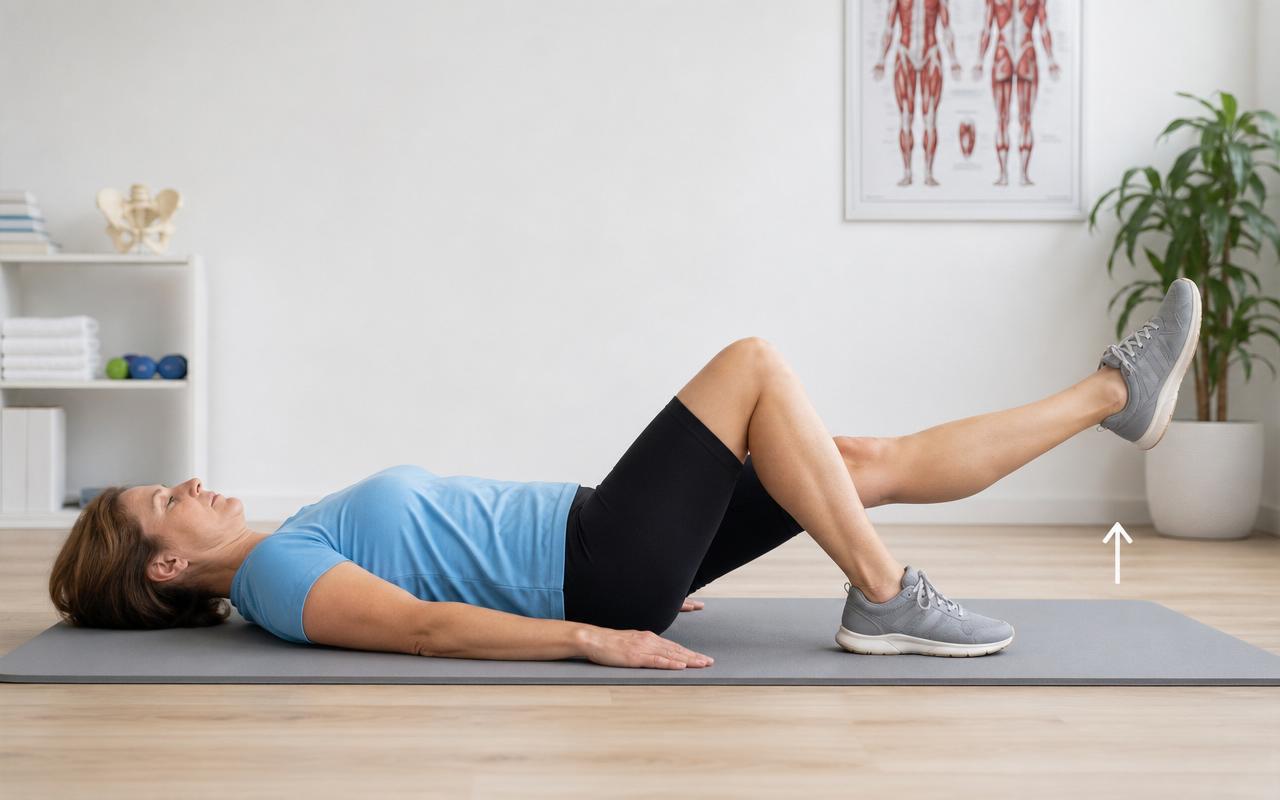
Patient lying on a mat with one knee bent and the other leg straight, lifted approximately 30 cm

Straight Leg Raises

~2 minutes Moderate
MusclesQuadricepsHip flexors
Why it matters

Builds quadriceps strength without bending the knee.

  • Walking
  • Getting in and out of bed
  • Stairs
How to do it
  1. 1Lie down with one knee bent, the other straight.
  2. 2Tighten the thigh of the straight leg.
  3. 3Lift the leg approximately 20–30 cm.
  4. 4Pause briefly at the top.
  5. 5Lower slowly with control.
Common mistakes
  • Bending the knee as you lift.
  • Lifting the leg too high — 20–30 cm is enough.
  • Dropping the leg quickly instead of lowering slowly.
Goal
10 repetitions
4
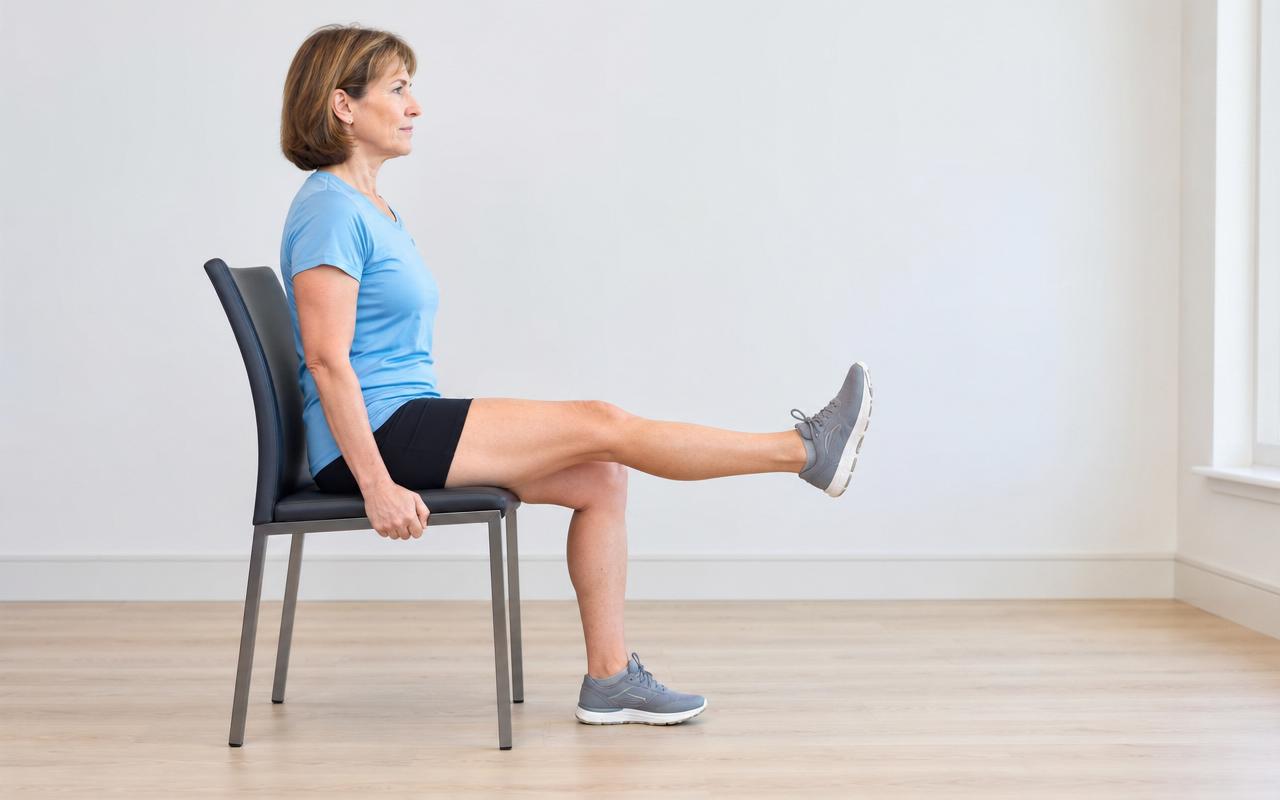
Patient sitting upright on a chair, slowly straightening the knee with foot lifted

Seated Knee Extensions

~2 minutes Easy
MusclesQuadriceps
Why it matters

Improves knee straightening, strengthens the quadriceps and makes standing easier.

How to do it
  1. 1Sit upright in a supportive chair.
  2. 2Slowly straighten your knee.
  3. 3Hold for 2–3 seconds at the top.
  4. 4Lower slowly with control.
  5. 5Repeat.
Common mistakes
  • Slumping backwards in the chair.
  • Swinging the leg up quickly.
  • Locking the knee aggressively at the top.
Goal
10 repetitions
5
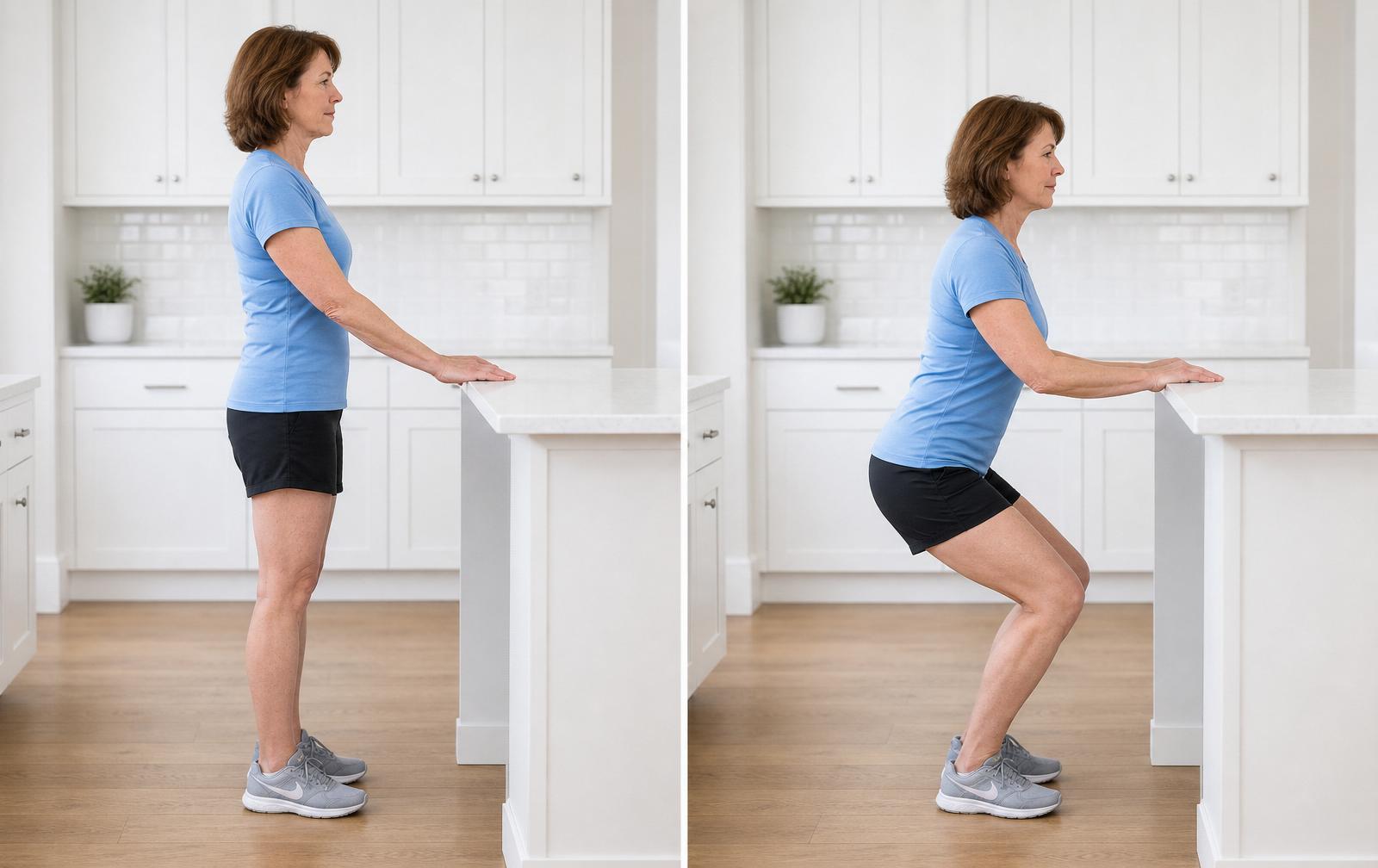
Patient holding a kitchen worktop, shown standing upright and then in a shallow mini squat

Mini Squats

~2 minutes Moderate
MusclesQuadricepsGlutesCalves
Why it matters

Probably the most functional strengthening exercise — it trains the muscles you use every day.

  • Standing
  • Walking
  • Stairs
  • Getting out of chairs
  • Balance
How to do it
  1. 1Stand holding a kitchen worktop for support.
  2. 2Feet shoulder width apart.
  3. 3Push your hips backwards.
  4. 4Bend the knees slightly.
  5. 5Keep knees tracking over your toes.
  6. 6Return to standing.
Common mistakes
  • Letting knees fall inwards.
  • Squatting too deeply — this is a mini squat.
  • Lifting heels off the floor.
Goal
10 repetitions
Consistency wins

Weekly exercise plan

Repeat every day. The whole routine takes just 10–15 minutes.

Mon
Tue
Wed
Thu
Fri
Sat
Sun
Every day
  • 1Heel Slides
  • 2Quadriceps Sets
  • 3Straight Leg Raises
  • 4Seated Knee Extensions
  • 5Mini Squats
10–15 minutes total
Small things, big results

Top tips

Little and often beats one long session.

Mild discomfort is acceptable.

Stop if pain becomes sharp.

Try to exercise every day.

Exercise both legs.

Progress gradually.

Important

When should I stop?

Stop exercising and seek advice from your physiotherapist or GP if you experience any of the following:

  • Severe pain
  • Rapid swelling
  • New locking of the knee
  • The knee giving way
  • Sudden inability to weight-bear
Setting the record straight

Common myths

"I shouldn't exercise because my knee hurts."
+

False. Gentle strengthening usually helps. Muscles that support the knee become stronger, which typically reduces pain over time.

"I have to do 20 different exercises."
+

False. These five exercises provide an excellent foundation. Consistency with a small routine beats a long list you cannot maintain.

"The harder I exercise the faster I'll recover."
+

False. Consistency is more important than intensity. Gentle, daily prehabilitation is what makes the biggest difference.

The bottom line

Five exercises. Fifteen minutes. A better recovery.

You don't need dozens of exercises before surgery. If you consistently perform these five essential exercises for 10–15 minutes each day, you'll improve your strength, maintain your knee movement and give yourself the best possible start for recovery after knee replacement.

Start today · Your future self will thank you

Practical tips

  • Start today — even four weeks of prehab makes a difference.
  • Ask your physiotherapist for a personalised programme if possible.
  • Track progress with simple measures like reps completed or distance walked.