


OpBuddy
An older couple arriving together at a modern hospital entrance
Back to Knee Joint School
Module 3 · Day of Surgery

The Day of Your Knee Replacement

A step-by-step guide to what happens from arriving at hospital through to taking your first steps after surgery.

It is completely normal to feel nervous on the day of surgery. Most patients find that once they arrive, the day feels calm, structured and carefully organised. You will be guided through every stage by nurses, surgeons, anaesthetists, theatre staff and physiotherapists. You will not be expected to remember everything yourself.

Modern hospital building exterior on a calm morning
Important: Hospitals vary in their routines. Always follow the fasting, medication, arrival and discharge instructions given directly by your own surgical team.
Your Journey Today

Eight clear stages — tap any step to jump straight to it.

  1. 1
    Arriving
  2. 2
    Meeting the Team
  3. 3
    Anaesthetic
  4. 4
    Theatre
  5. 5
    Recovery Room
  6. 6
    Back to the Ward
  7. 7
    Family Updates
  8. 8
    Getting Moving
An older patient arriving at a bright hospital admissions area
Step 1
Stage 1 of 8

Arriving at Hospital

Your admission letter should tell you the date of your operation, what time to arrive, which ward or department to attend, the contact number for the hospital or ward, and the name of the consultant responsible for your care.

Most patients are asked to arrive several hours before the planned operation time. This gives the team enough time to complete safety checks, confirm your medical details and prepare you properly for surgery.

When you arrive

A member of the reception or nursing team will:

  • Confirm your identity
  • Check your admission details
  • Give you an identity bracelet
  • Ask about your medical history
  • Confirm your allergies
  • Review the operation you are having
  • Check when you last ate and drank
  • Confirm what medicines you have taken

You may be asked the same questions by several different members of staff. This is normal and is part of the hospital’s safety system.

Fasting and drinking

You must follow the fasting instructions given by your own hospital. Many hospitals ask patients to stop eating solid food around six hours before surgery and allow clear fluids until closer to the operation, but exact times vary.

  • No food outside the time specified by the hospital
  • No milky drinks outside the fasting instructions
  • Do not chew gum or suck sweets if told not to
  • Continue clear fluids only if your hospital has advised this
  • Incorrect fasting may result in surgery being delayed or cancelled

What to bring

  • Admission letter
  • All regular medication in original packaging
  • Medication list
  • Glasses
  • Hearing aids
  • Walking aids if advised
  • Phone and charger
  • Loose clothing
  • Supportive footwear
  • Contact details for the person collecting you
Key takeaway

The repeated questions are deliberate safety checks — not a sign that staff do not know who you are.

Frequently asked
Why do I need to arrive so early?+

Because several safety checks, reviews and preparations must happen before surgery.

Can my family stay with me?+

This depends on local hospital policy. In many hospitals, relatives can stay for part of the admission period but may need to leave when you go to theatre.

What happens if I have eaten or drunk outside the fasting instructions?+

Tell the team immediately. Your operation may need to be delayed for safety.

An older patient meeting members of the surgical team in a pre-operative bay
Step 2
Stage 2 of 8

Meeting Your Surgical Team

Before surgery, you will usually meet several members of the team caring for you. These may include:

  • Your surgeon
  • Your anaesthetist
  • A ward nurse
  • A theatre nurse
  • An operating department practitioner
  • A physiotherapist
  • A pharmacist, depending on the hospital

Your surgeon will

  • Confirm the procedure
  • Check your consent form
  • Answer last-minute questions
  • Mark the correct leg with a pen
  • Confirm the side being operated on

Your anaesthetist will

  • Review your health and previous anaesthetics
  • Ask about allergies
  • Review your medications
  • Discuss your anaesthetic options
  • Explain the pain-relief plan
  • Discuss any particular risks relevant to you

The team may ask again

  • Your name
  • Your date of birth
  • The operation you are having
  • Which knee is being replaced
  • Whether you have any allergies

Cannula and medicines

A small plastic tube called a cannula is usually placed in a vein in your hand or arm. This allows the team to give:

  • Fluids
  • Antibiotics
  • Anti-sickness medicines
  • Pain-relief medicines
  • Sedation or anaesthetic medicines

Some patients also receive medication before surgery to reduce pain, inflammation, sickness or anxiety.

Key takeaway

Nothing proceeds until the whole team is satisfied that the correct patient, correct procedure and correct knee have been confirmed.

Frequently asked
Why is my leg marked?+

It is an additional safety check to identify the correct side.

Can I still ask questions at this stage?+

Yes. This is an appropriate time to raise any last-minute concerns.

What if I am frightened of needles?+

Tell your anaesthetist. They can explain what will happen and may be able to use methods that make cannula insertion more comfortable.

An anaesthetist reassuring an older patient in the pre-operative area
Step 3
Stage 3 of 8

Understanding Your Anaesthetic Options

The two main anaesthetic approaches for knee replacement are:

  • Spinal anaesthetic, usually with sedation
  • General anaesthetic

The most suitable option depends on your health, medical history, the surgical plan and your preferences. Your anaesthetist will explain the advantages, disadvantages and risks before you agree to the plan.

Option AAnaesthetic

Spinal anaesthetic (with or without sedation)

A small amount of local anaesthetic is injected into the lower back near the spinal nerves. This causes numbness from the waist down. You should not feel pain during the operation. You may remain awake, have light sedation, or be more deeply sedated so that you are sleepy and may remember very little.

Possible advantages

  • Less sickness and drowsiness after surgery
  • Earlier eating and drinking
  • Excellent early pain relief
  • Reduced need for strong opioid painkillers
  • Earlier mobilisation
  • Less effect on breathing
  • Possible reduction in blood loss
  • Potentially shorter hospital stay

Possible disadvantages and side effects

  • Temporary inability to move the legs properly
  • Itching if certain pain-relieving medicines are added
  • Temporary difficulty passing urine
  • Headache in a small number of patients
  • Rare bleeding, infection or nerve damage

Spinal anaesthesia is commonly offered for hip and knee replacement, but it is not suitable for everyone.

Option BAnaesthetic

General anaesthetic

A general anaesthetic produces controlled unconsciousness. You will be fully asleep and will not feel or remember the operation. Anaesthetic medicines may be given through a cannula or inhaled as gas. A breathing tube is commonly used to support breathing while you are asleep.

Possible advantages

  • You are unconscious throughout
  • You should not be aware of the theatre environment

Possible disadvantages and side effects

  • Drowsiness
  • Sickness
  • Sore throat
  • Headache
  • Shivering
  • Greater need for pain relief after surgery
  • Temporary confusion, particularly in some older patients
  • Possible chest complications in higher-risk patients

A general anaesthetic may be combined with a nerve block, local anaesthetic around the wound, or other pain-relief techniques.

Nerve blocks & wound infiltration

A nerve block is an injection of local anaesthetic near the nerves supplying the leg. It can reduce pain for several hours but may temporarily weaken the leg. Wound infiltration is local anaesthetic placed around the joint by the surgeon. It can improve pain relief without necessarily weakening the muscles.

Evidence

Large observational studies have found that spinal anaesthesia for total knee replacement is associated with shorter hospital stays and lower rates of some short-term complications and readmission compared with general anaesthesia. However, anaesthetic choice must always be individualised.

Key takeaway

The best anaesthetic is the one that is safest and most appropriate for you — not simply the one used most often.

Frequently asked
Will I be awake during a spinal anaesthetic?+

You can be awake, lightly sedated or more deeply sedated. This is discussed with you beforehand.

Will I hear the operation?+

Some people may hear theatre sounds if lightly sedated, but music and deeper sedation may be available.

Does the spinal injection hurt?+

You may feel pressure or brief discomfort. Local anaesthetic is normally used to make the procedure more comfortable.

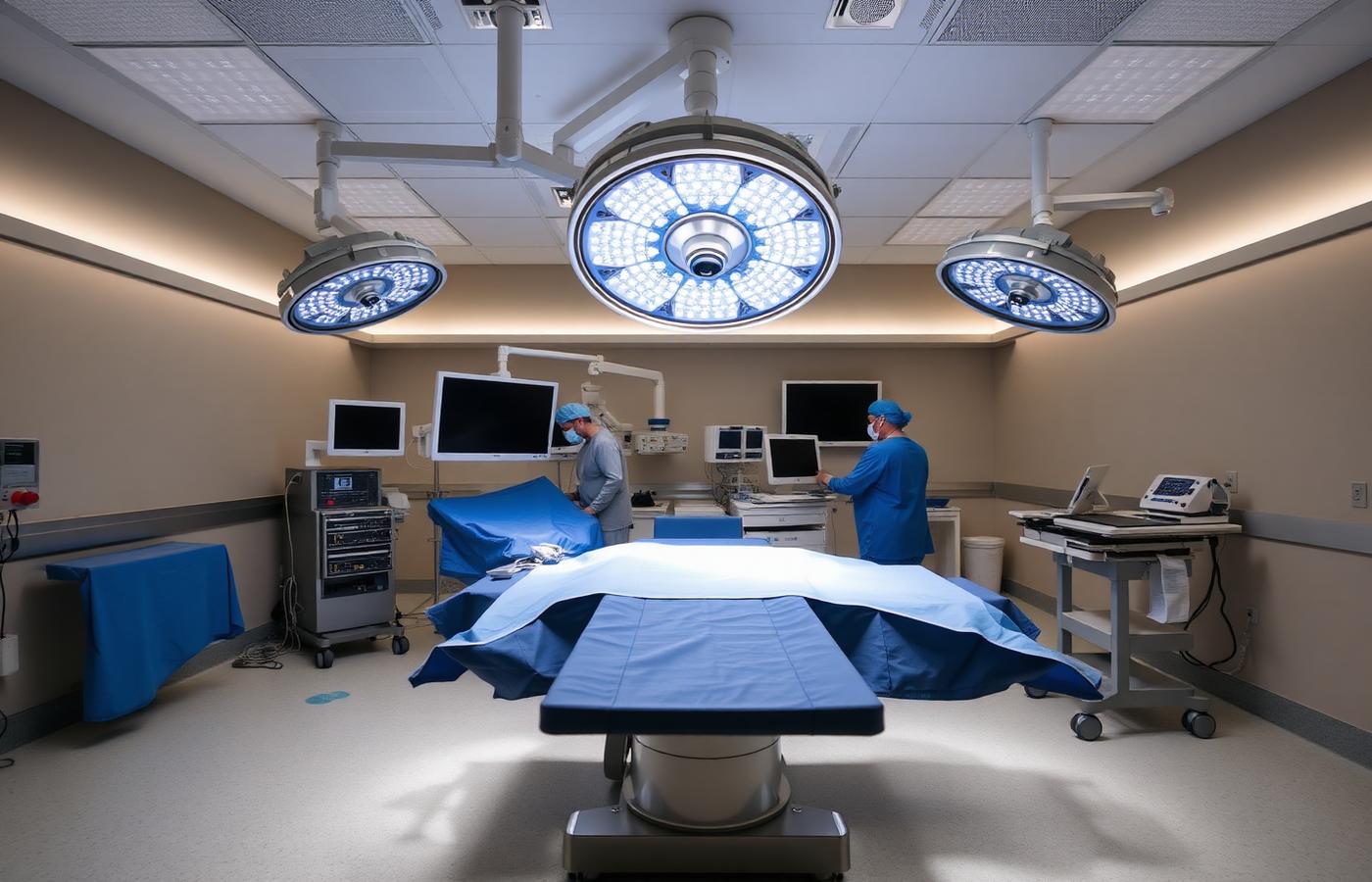
A modern operating theatre with staff preparing equipment
Step 4
Stage 4 of 8

Inside the Operating Theatre

The operating theatre may feel:

  • Bright
  • Cool
  • Busy
  • Full of equipment and monitors

This can seem unfamiliar, but every item and every team member has a specific purpose. You may meet:

  • The anaesthetist
  • Anaesthetic assistant
  • Scrub practitioner
  • Theatre nurse
  • Surgeon
  • Surgical assistants

The team will complete a final safety check before the operation begins.

Monitoring equipment

Monitoring equipment is attached to measure:

  • Heart rate
  • Blood pressure
  • Oxygen level
  • Breathing
  • Other observations if required

Warm blankets can be provided if you feel cold.

If you have a spinal anaesthetic, a screen is placed between you and the operation, so you will not see the surgery. You may be offered:

  • Sedation
  • Headphones
  • Music
  • Reassurance from the anaesthetic team

The anaesthetist remains with you throughout the operation and continuously monitors your condition. The operation itself commonly takes around 60–90 minutes, although timing varies.

Key takeaway

Your anaesthetist stays with you throughout the entire operation and monitors you continuously.

Frequently asked
Will I see the operation?+

No. A screen prevents you from seeing the surgical area.

Can I listen to music?+

Many hospitals allow this, especially if you are having spinal anaesthesia with light sedation.

Why is the theatre cold?+

Operating theatres are temperature-controlled, but warm blankets can be provided.

A recovery nurse beside an awake, comfortable patient in a post-anaesthetic care area
Step 5
Stage 5 of 8

The Recovery Room

After surgery, you will be moved to the recovery room, which is usually close to the operating theatre. A recovery nurse will stay close by and monitor:

  • Heart rate
  • Blood pressure
  • Oxygen level
  • Breathing
  • Pain
  • Nausea
  • Alertness
  • Movement and sensation in the legs

You may receive

  • Oxygen through a mask or nasal tubing
  • Fluids through your cannula
  • Pain relief
  • Anti-sickness medicine
  • Ice around the knee
  • A drink or light snack once safe

If you have had a spinal anaesthetic, your legs may remain numb or heavy for a while. If you feel pain, nausea, itching, dizziness or anxiety, tell the nurse. These symptoms can usually be treated promptly.

Once the team is satisfied that you have recovered safely from the anaesthetic, you will move to the ward or a step-down area.

Key takeaway

The recovery room is a closely monitored environment. You will not be left alone.

Frequently asked
Will I be in pain immediately?+

Many patients are relatively comfortable during the first few hours because spinal anaesthesia, nerve blocks and other pain relief may still be working.

Can I eat or drink?+

You may be offered fluids and a light snack once it is safe.

How long will I stay in recovery?+

This varies according to your anaesthetic, observations, pain control and overall recovery.

A bright hospital room with a nurse checking on a patient
Step 6
Stage 6 of 8

Returning to the Ward

When you return to the ward, the nursing and surgical teams will continue monitoring your recovery. They will assess:

  • Pain
  • Blood pressure
  • Oxygen levels
  • Wound dressing
  • Circulation
  • Leg movement
  • Nausea
  • Passing urine
  • Eating and drinking

Your pain-relief plan may include

  • Regular paracetamol
  • Anti-inflammatory medicine if suitable
  • Stronger painkillers if needed
  • Nerve block or local anaesthetic effects
  • Ice and elevation

Pain is expected after knee replacement, but it should be actively managed. Tell the team if your pain is not controlled.

You may be encouraged to

  • Sit upright
  • Eat and drink
  • Move your ankles
  • Bend and straighten the knee
  • Begin standing and walking
  • Change into your own comfortable clothes
Key takeaway

Good pain control helps you move, exercise and recover — it is not something you should simply endure in silence.

Frequently asked
Will I return to the same ward?+

Usually, but this depends on the hospital pathway.

What if my pain is not controlled?+

Tell the nurse. Additional pain relief or review by the pain team may be available.

Will I stay overnight?+

Some patients go home the same day. Others stay one or more nights depending on recovery and local policy.

Family members waiting in a hospital lounge
Step 7
Stage 7 of 8

Family Updates

Visiting and family-update arrangements vary between hospitals.

Before surgery, ask

  • Whether relatives can stay during admission
  • Where they should wait
  • Who will contact them after surgery
  • When they may visit
  • What time collection may be needed
  • Which telephone number they should use

After surgery, your family may be updated once

  • The operation is complete
  • You are stable in recovery
  • You are back on the ward
  • A discharge plan is becoming clear
Key takeaway

Agree one main family contact in advance so information can be shared clearly and consistently.

Frequently asked
Will my surgeon speak to my family?+

This varies by hospital and consent arrangements.

Can relatives visit straight after surgery?+

This depends on the hospital and how you are recovering.

When should my lift arrive?+

Wait for confirmation from the ward. Discharge timing can change.

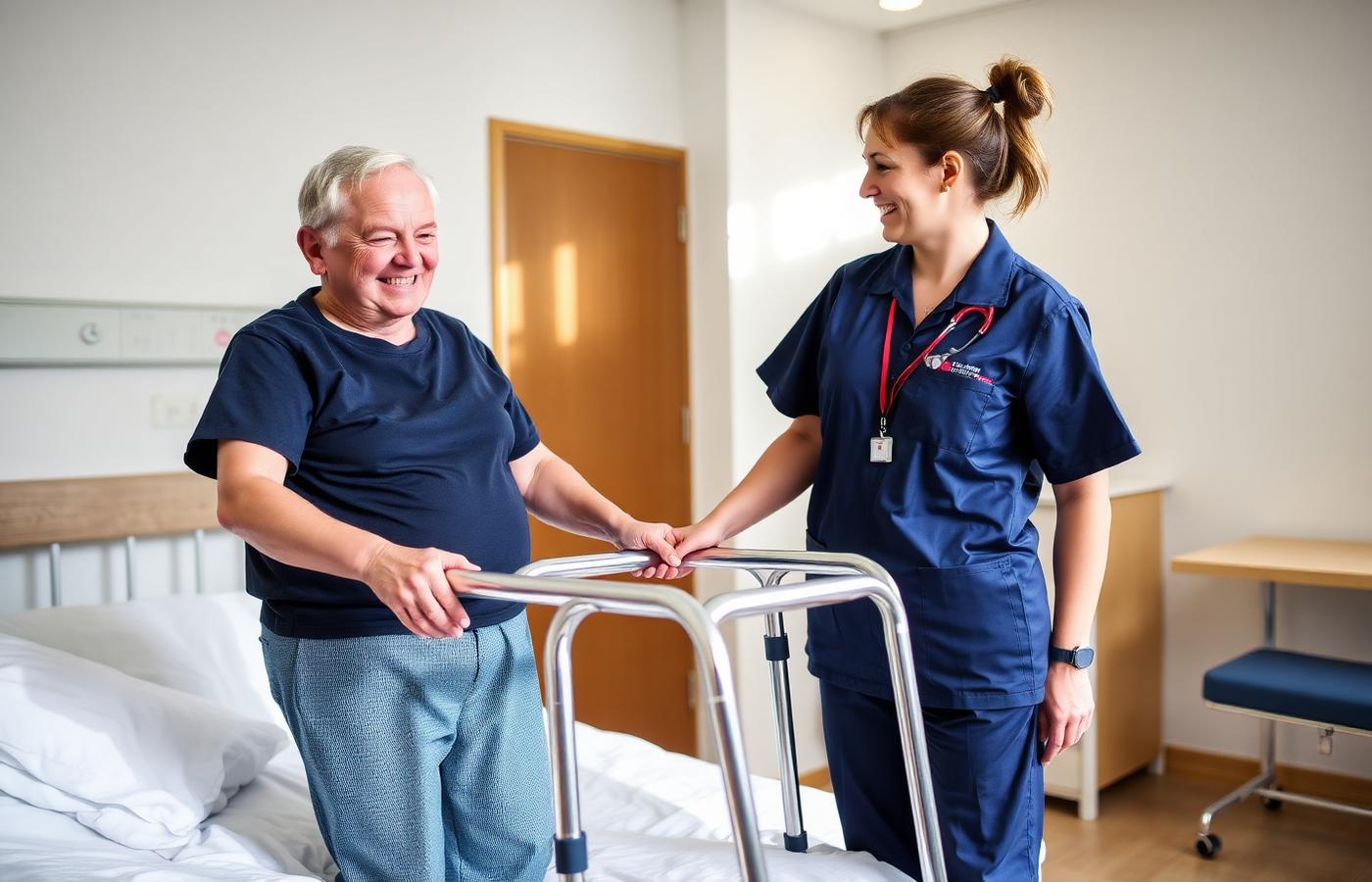
A physiotherapist helping an older patient stand with a walking frame
Step 8
Stage 8 of 8

Getting Moving

Early movement is an important part of modern joint replacement recovery.

Once it is safe, a physiotherapist or member of the ward team may help you:

  • Sit on the edge of the bed
  • Stand with support
  • Use a walking frame or crutches
  • Walk a short distance
  • Get on and off a chair
  • Use the toilet safely
  • Practise stairs if needed
  • Begin knee exercises

Your first exercises may include

  • Ankle pumps
  • Quadriceps contractions
  • Knee bending
  • Knee straightening
  • Straight leg raises if able

You may also be encouraged to

  • Ice the knee
  • Elevate the leg
  • Keep the knee straight when resting
  • Walk little and often
  • Take pain relief before therapy if advised

The knee may feel more sore once the nerve block or spinal anaesthetic wears off. This is normal and does not mean anything has gone wrong. The team will not expect perfection on the first day. The aim is safe progress.

Going home

Before discharge, the team will usually check that you can:

  • Get in and out of bed
  • Stand safely
  • Walk with the appropriate aid
  • Use the toilet
  • Manage any necessary stairs
  • Understand your medication
  • Understand wound care
  • Arrange transport and support at home
From the Oxford patient booklet

Many patients are helped out of bed and taught to walk with crutches or a frame within hours of surgery, with discharge planned when they can manage safely.

Key takeaway

Your first steps may feel difficult, but they mark the beginning of regaining independence.

Frequently asked
How soon will I walk?+

Many patients begin standing and walking on the day of surgery or within 24 hours.

Will walking damage the new knee?+

No, when guided by the team. Early walking is a standard part of recovery.

What if I feel dizzy?+

Tell the staff immediately. They will help you sit or lie down and assess the cause.

You are not alone

You will be guided through every step.

The day may feel unfamiliar, but the process is carefully structured. Your team will repeatedly check your identity, explain your anaesthetic, monitor you throughout surgery, control your pain and help you begin moving safely. You do not need to remember everything — your job is simply to follow the instructions given by your own hospital and tell the team how you feel.

Continue to Early Recovery
References

Sources & further reading

  1. Heckmann, N.D., De, A., Porter, K.R. and Stambough, J.B. (2023) ‘Spinal versus general anesthesia in total knee arthroplasty: Are there differences in complication and readmission rates?’, Journal of Arthroplasty, 38(4), pp. 673–679.e1. https://doi.org/10.1016/j.arth.2022.10.036
  2. Pugely, A.J., Martin, C.T., Gao, Y., Mendoza-Lattes, S. and Callaghan, J.J. (2013) ‘Differences in short-term complications between spinal and general anesthesia for primary total knee arthroplasty’, Journal of Bone and Joint Surgery American, 95(3), pp. 193–199. https://doi.org/10.2106/JBJS.K.01682
  3. Royal College of Anaesthetists and patient representatives (2025) Anaesthetic choices for hip or knee replacement. Patient information leaflet.
  4. Oxford University Hospitals NHS Foundation Trust (2025) Hip and knee replacement: Helping you prepare for surgery and discharge home. Oxford: Oxford University Hospitals NHS Foundation Trust.